Key Takeaways
- What a change of character is and how it differs from a BOS
- Which protected swing to watch for a real structure shift
- Why a candle close beyond that level matters
- How some traders wait for a pullback after a CHoCH
- How to avoid fakeouts that only look like a change of character
Ever watch a beautiful uptrend just quietly stop behaving, like it forgot what it was supposed to do? That moment often has a name: a change of character, usually written CHoCH on charts.
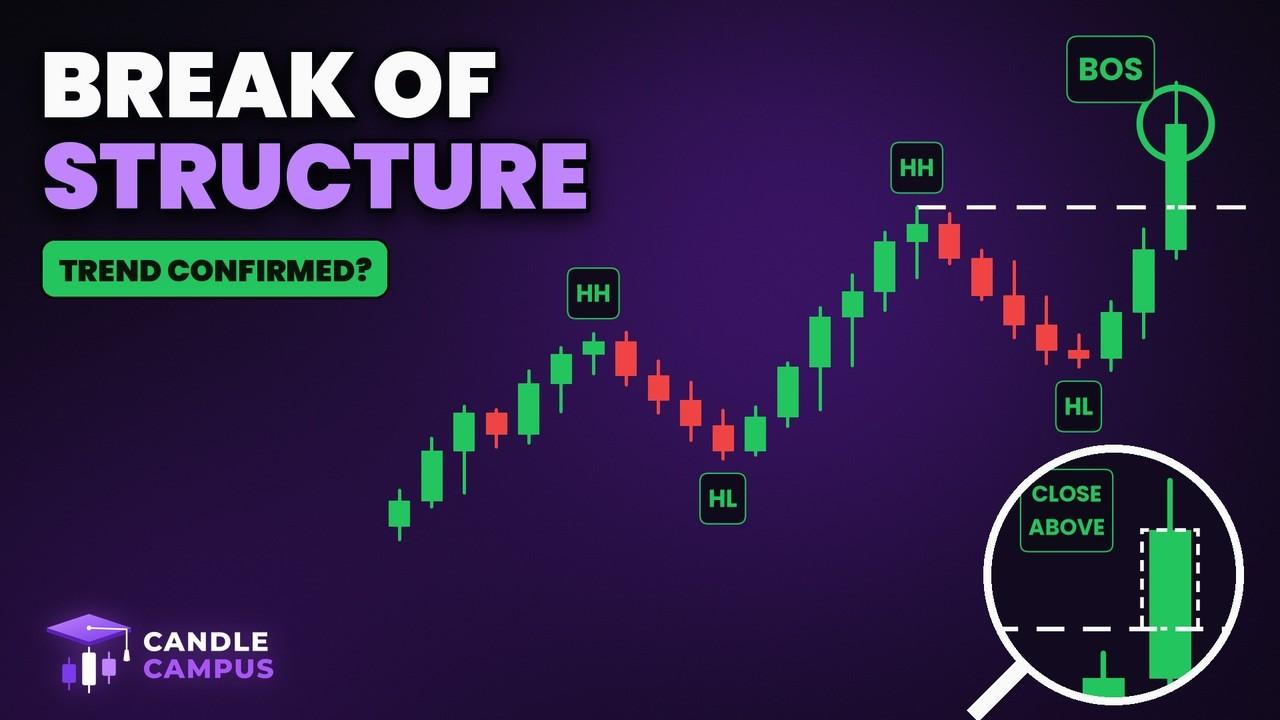
In our last lesson we covered break of structure (BOS), where price breaks the last swing in the direction of the trend and confirms the trend is still going. A change of character is its plot twist. In this guide you'll learn what it is, how it differs from a BOS, which swing point to watch, how some traders use it, and how not to get fooled by fakeouts. One thing up front: a change of character is a way of reading the chart, not a guaranteed reversal.
What a change of character is
A change of character is the first break of structure against the current trend.
- In an uptrend, price has been making higher highs and higher lows. A bearish CHoCH happens when price finally breaks below the last higher low.
- In a downtrend, price has been making lower highs and lower lows. A bullish CHoCH happens when price breaks above the last lower high.
Same idea, just flipped. It's the first sign the trend might be changing its personality.
Why it matters, and why it's not a promise
A trend is basically a promise. An uptrend promises to keep holding its higher lows, and when price breaks one of them, that promise is broken for the first time. That's why many traders treat a change of character as an early warning that the trend could be shifting.
The key word is could. Think of it as a yellow light, not a red one. Sometimes the old trend shrugs it off and carries on, so a change of character is a signal to pay attention, not proof that a reversal has started.
Change of character vs break of structure
| | Break of structure (BOS) | Change of character (CHoCH) | |---|---|---| | Direction | With the trend | Against the trend | | In an uptrend | Price breaks above the last high | Price breaks below the last higher low | | In a downtrend | Price breaks below the last low | Price breaks above the last lower high | | What it says | "Still going" | "Hold on, something's different" |
A simple way to remember it: a BOS is the trend nodding yes, and a change of character is the first time it shakes its head.
Which swing point to watch
Not every little dip counts. Many traders focus on the higher low that created the last break of structure, often called the protected low. It's the low the uptrend needs to hold, so when price closes below it, the structure really has changed.
In a downtrend, the mirror version is the protected high: the lower high that led to the last break lower.
Small internal dips between those swings can be noisy. If price only breaks a minor wiggle and the protected low is still intact, most traders wouldn't call it a change of character yet.
Body close vs wick
Just like with a break of structure, a lot of traders want a candle body to close beyond the protected level, not just a wick poking through it. A wick can snap right back, and often does. A close through the level is a much clearer statement that the structure has actually changed.
How traders use a change of character
A common way to approach it, step by step:
- Wait for it to actually happen, with a candle close through the protected swing.
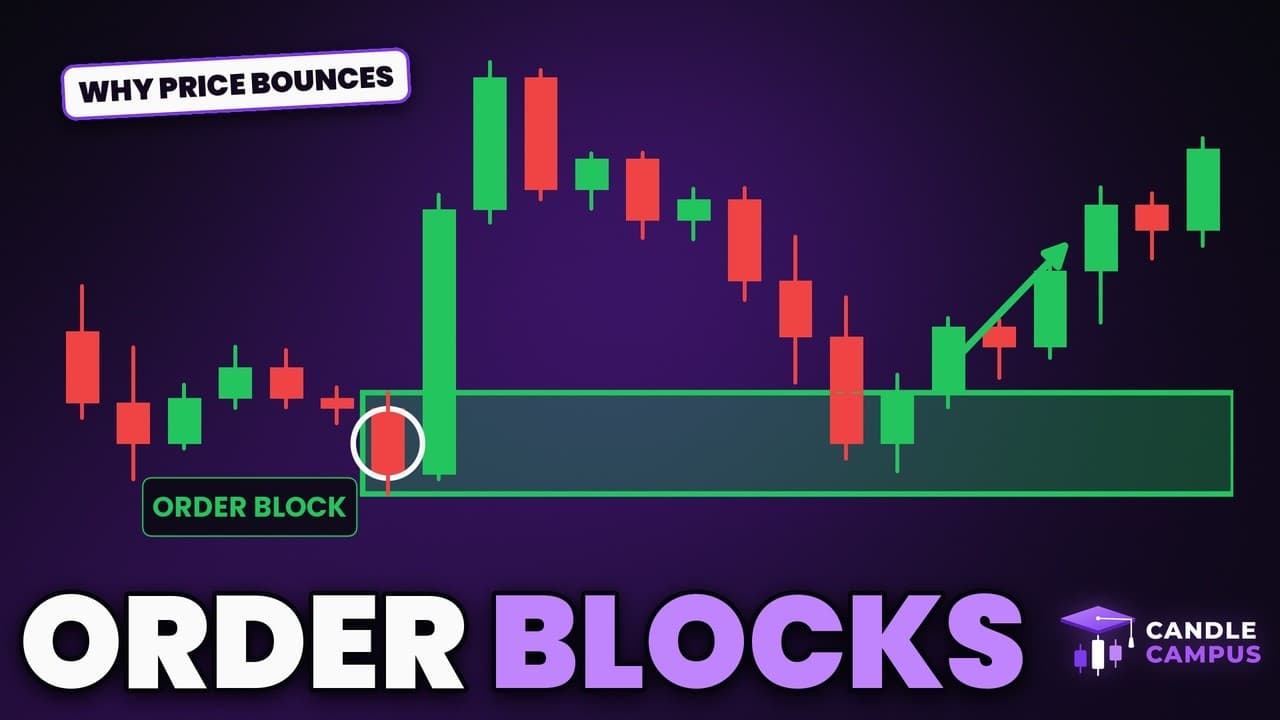
- Wait for a pullback in the new direction instead of jumping in right away. After a bearish change of character, price often pops back up into an order block or a fair value gap left by the drop.
- Look for a reaction in that area before entering.
- Place the stop beyond the swing high above the entry, and aim for the next swing low or a multiple of the risk.
A worked example
Here's the example from the video, with simple round numbers:
- Price is in an uptrend, and the protected low sits at $104.
- Price fails to make a new high (a lower high forms), then a red candle closes at $103, below the protected low. That's a bearish change of character.
- Price then pulls back up to $105, into the gap left by the drop.
- A trader sells the reaction at $105 with a stop at $108, above the last swing high. That's about $3 of risk.
- The target is the old swing low at $99, about $6 of potential reward, or roughly 2 to 1.
Signals fail, so the stop is not optional. If price pushes back above the swing high, the idea is wrong and the loss stays small.
Timeframe context
A change of character on a small timeframe might just be a normal pullback on a bigger one. That scary five minute reversal could be a tiny dip on the daily chart, where the uptrend is still perfectly healthy. It's worth zooming out before you get excited, and knowing which timeframe's structure you're actually trading.
Fakeouts that look like a change of character
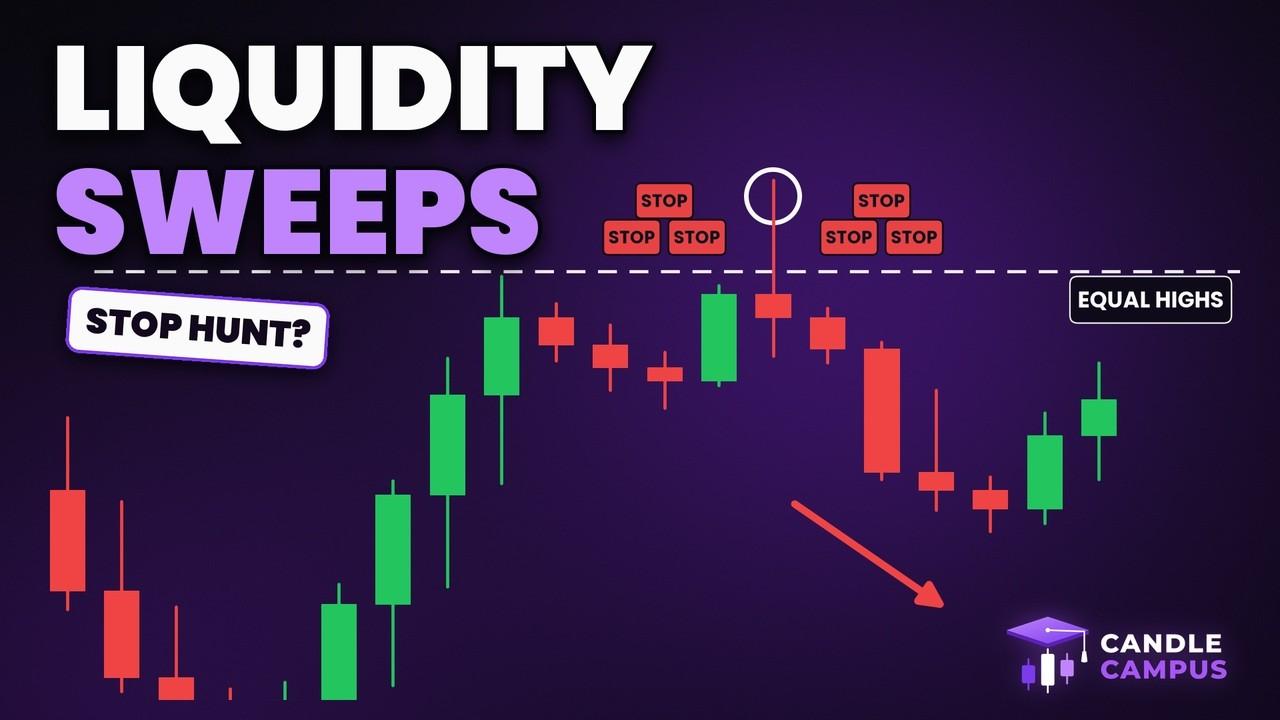
Sometimes price wicks below the protected low, grabs the stops sitting there, and snaps right back up. That's more like a liquidity sweep than a real change of character, and the trend often carries on afterwards. This is exactly why the candle close matters so much: no body close beyond the level, no change of character.
Common mistakes
- Calling every little dip a change of character, even when the protected low never broke.
- Treating it as a guaranteed reversal and going all in on a maybe.
- Ignoring the bigger timeframe, where the trend might still be healthy.
- Jumping in on the breaking candle instead of waiting for a pullback, which usually means a worse entry and a wider stop.
How it links to other concepts
- Break of structure confirms the trend; a change of character is the first break against it.
- Order blocks and fair value gaps are common areas traders watch for the pullback after a change of character.
- Liquidity sweeps can look like a change of character for a moment, then snap back.
Quick recap
- A change of character is the first break of structure against the trend: an uptrend breaking its last higher low, or a downtrend breaking its last lower high.
- It hints at a possible trend shift, not a sure thing.
- Watch the protected swing that created the last break of structure, and look for a candle close beyond it.
- Check the bigger timeframe.
- If you trade it, wait for a pullback, with a stop beyond the swing and a clear target.
A note on risk
A change of character can fail, and the old trend can come roaring back. Keep your position size small enough that being wrong is just a small, boring loss. Practice spotting these on historical charts before you risk real money, and judge the idea over many examples, not one trade.
Educational only. Not financial advice. Practice on charts before you risk real money.
Follow Candle Campus: @candlecampus · More lessons at candlecampus.com